Common Anodizing Defects and How to Prevent Them
Anodizing is a critical surface finishing process for enhancing corrosion resistance, wear resistance, and the aesthetic appeal of aluminum and other non-ferrous metals. While the process is widely used across aerospace, defense, electronics, and architectural applications, it is not immune to potential issues. Anodizing defects can compromise both the appearance and performance of the finished part, often resulting in costly rework or scrapped material.
Understanding the root causes of these defects and how to prevent them is key to improving quality, consistency, and throughput. Below, we outline several of the most common anodizing defects and share practical prevention techniques for each.
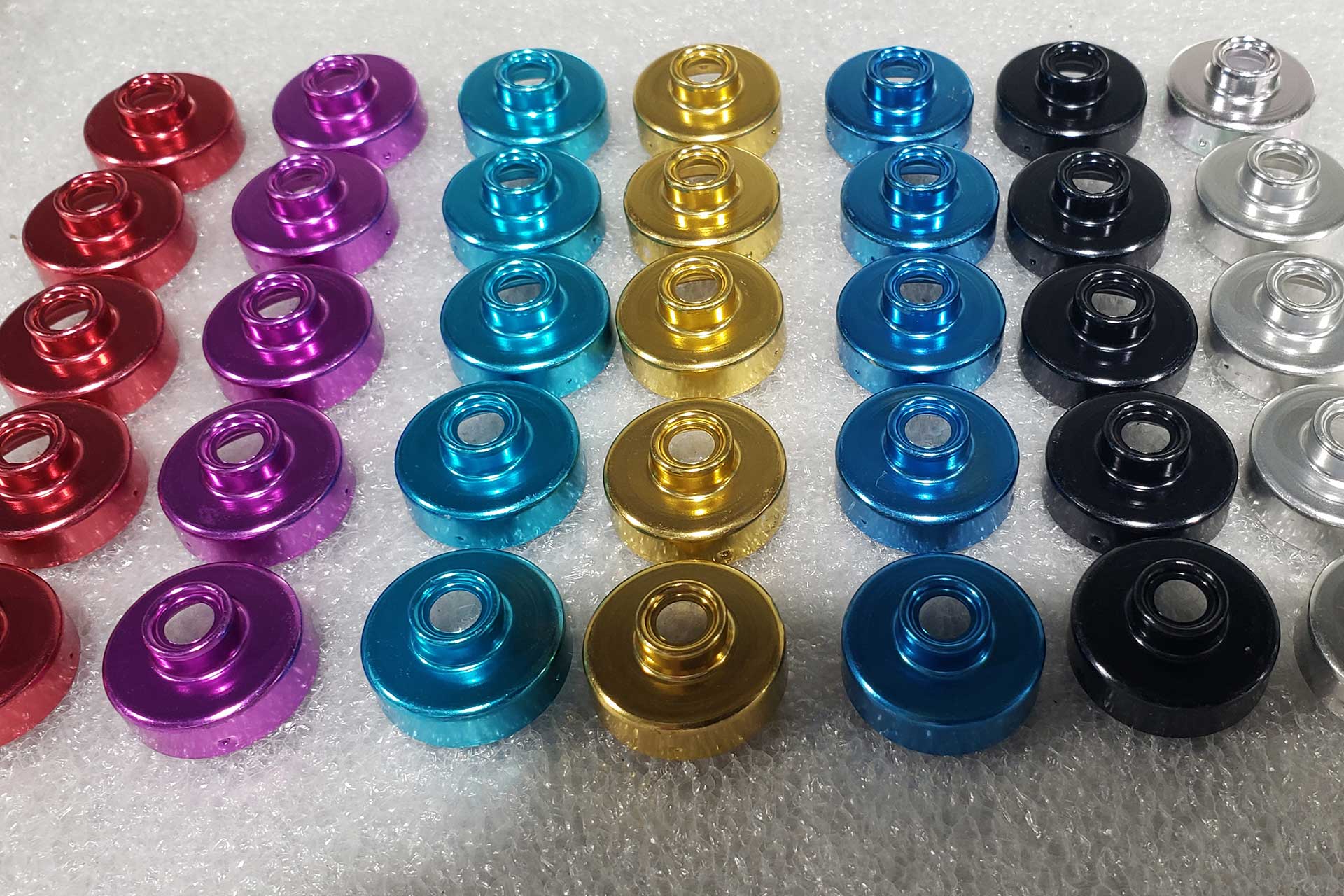
Discoloration
Cause: Discoloration can stem from a variety of factors, including inconsistent alloy composition, contamination in the anodizing bath, temperature fluctuations, or improper sealing. Certain aluminum alloys (particularly those with high copper or silicon content) are also more prone to uneven coloring.
Prevention: To minimize discoloration, ensure consistent cleaning and deoxidizing prior to anodizing. Use only alloys that are known to anodize well, such as 6061 or 5005 series aluminum. Maintain strict control over bath chemistry, temperature, and time, and monitor sealing conditions to avoid over- or under-sealing.
Pitting
Cause: Pitting is often caused by surface contamination, chloride contamination in process baths, or improper rinsing between process steps. The result is small holes or craters in the anodized surface, which can compromise corrosion resistance and create visual defects.
Prevention: Start with a thorough degreasing and etching process to remove oils, dirt, and oxides. Use deionized water for rinsing and monitor chloride levels in anodizing and cleaning baths closely. Employ proper handling procedures to avoid introducing contaminants during loading or racking.
Uneven Coating Thickness
Cause: Uneven anodic film buildup may occur due to poor electrical contact, inconsistent agitation, or improper part racking. Geometry and part orientation in the tank can also influence current distribution and, therefore, coating uniformity.
Prevention: Ensure secure and consistent electrical contact between the part and the rack. Agitate electrolyte solution uniformly during the process to maintain even temperature and chemical distribution. When planning for production-scale anodizing, use tooling and racks designed for optimal part positioning.
Burning
Cause: Burning happens when parts are exposed to excessive current density or poor cooling during the anodizing process. It typically appears as darkened or roughened areas on the surface, particularly at sharp corners or edges.
Prevention: Use current density calculations appropriate to the surface area being anodized. Ramp up current gradually and ensure sufficient agitation and cooling, especially during hardcoat anodizing or with large parts.
Smut Formation
Cause: Smut—dark, powdery residues on the surface after etching or anodizing—can result from high alloy content, inadequate rinsing, or incompatible chemical processes.
Prevention: Select anodizing-friendly alloys and optimize etching times. Use multiple deionized water rinses after alkaline or acid treatments. Maintain fresh chemical baths and monitor dissolved metal content regularly.
Quality Control Measures
In addition to process-specific adjustments, implementing a strong quality control program is essential for preventing anodizing defects. Recommended practices include:
- Regular bath analysis and maintenance logs
- Use of SPC (Statistical Process Control) to monitor critical variables
- Standardized pre-treatment procedures
- Periodic training for operators and finishing technicians
- Visual and thickness inspections using calibrated equipment
Partnering With a Trusted Anodizing Specialist
At Light Metals Coloring, we understand that even small variations in process parameters can lead to costly defects. That’s why we offer tightly controlled anodizing services, including Type II sulfuric anodizing and Type III hardcoat anodizing - engineered for durability, precision, and repeatability.
With in-house testing, strict process documentation, and decades of finishing experience, we help our customers eliminate rework, extend part life, and meet even the most rigorous industry specifications.
Need support with anodizing consistency or troubleshooting defects? Contact our team today to learn how we can support your finishing needs with dependable, high-performance anodizing solutions.