Chem Film vs. Anodizing
Differences, Applications, and Which Offers Better Protection
Choosing the right aluminum finish is about ensuring your component performs exactly as expected in the environment for which it was designed. Whether you’re working on aerospace brackets, defense hardware, or precision industrial parts, the decision between chem film vs. anodize can impact everything from conductivity to corrosion resistance and longevity.
While both finishing processes are widely used, they serve very different purposes. This blog breaks down how each one works, where they excel, and how to choose the best fit for your application.
LMC Offers Both and the Expertise to Guide You
At Light Metals Coloring, we provide both types of metal finishing services: chem film and anodization services, and we help our customers choose the one that makes the most sense for their part, performance requirements, and budget.
Whether you need a chemical conversion coating that meets MIL-DTL-5541 or an aluminum anodizing process that complies with MIL-A-8625 or AMS-2471, our team delivers consistent, certifiable results.
With NADCAP-accredited chemical processing, ISO-certified systems, and decades of experience in aerospace, defense, and industrial finishing, LMC supports manufacturers at every stage, from prototype to full production.
We also understand the small stuff that matters. Need to preserve conductivity? Tight on dimensional tolerances? Need support for masking or selective finishing? We’ve got it covered.
Understanding Why Aluminum Needs Finishing
Aluminum is a popular material because it’s lightweight, strong, and relatively corrosion-resistant. But "relatively" isn't always good enough, especially in high-stakes environments where exposure to moisture, chemicals, or wear is constant. That’s why finishing aluminum is standard practice.
The right finish can improve corrosion resistance, promote better paint adhesion, control electrical properties, and extend the service life of the component. Now let’s look at two of the most common finishing methods: chem film and anodizing.
What Is Chem Film (Chromate Conversion Coating)?
Chem film, formally known as chromate conversion coating, is a chemical process that creates a protective layer on the aluminum surface without significantly changing its dimensions. The treatment reacts with the aluminum to form a thin, corrosion-resistant film, and it’s often used where electrical conductivity and paint adhesion are important.
The finish can appear clear or have a yellow tint, depending on the type of chromate used. It's a go-to option when minimal coating thickness is needed, and electrical performance can’t be compromised. Chem film is also easy to rework, making it a smart option for components that may need post-processing or adjustment later in the production cycle.
What Is Anodizing?
Anodizing is a completely different process. It uses an electrolytic reaction to thicken the natural oxide layer on aluminum, resulting in a durable, corrosion-resistant, and non-conductive surface. It’s not a film added to the surface; it’s a transformation of the surface itself.
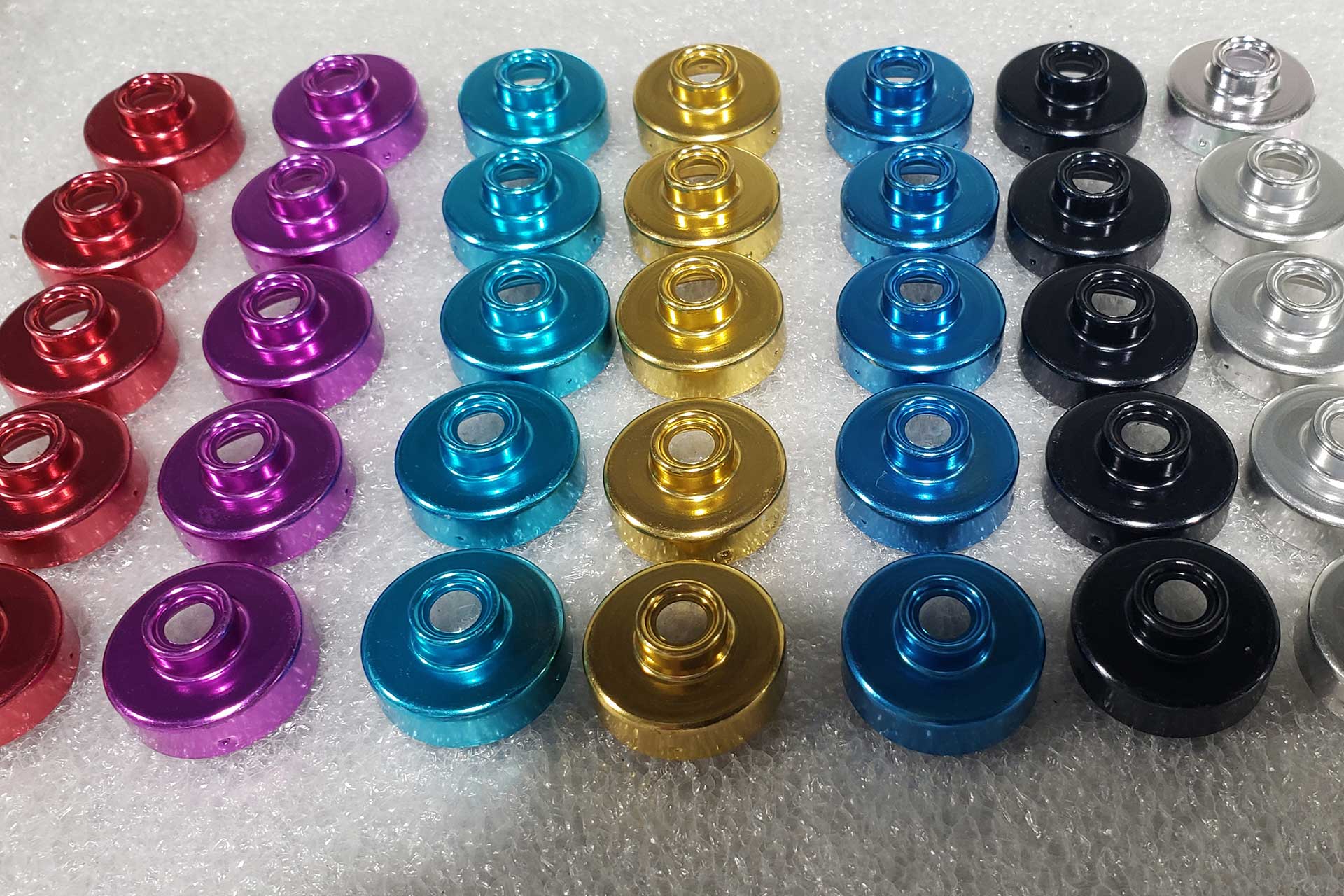
There are different types of anodizing, including Type II, used for decorative or moderate corrosion resistance, and Type III (hardcoat anodizing), which offers superior wear and abrasion protection. Depending on the application, anodized parts can also be dyed for aesthetics or part identification.
Anodized finishes are harder and more abrasion-resistant than chem film, but they also build up more material on the surface, which needs to be considered in designs with tight tolerances. They’re also non-conductive, which can be a plus or a problem, depending on the use case.
Key Differences Between Chem Film and Anodizing
The biggest difference between chem film and anodizing lies in their physical and functional properties. Chem film creates a thin, conductive layer ideal for grounding and electrical continuity. In contrast, anodizing results in a much thicker, non-conductive layer with enhanced resistance to wear, abrasion, and corrosion.
Chem film is excellent for parts that need to maintain conductivity or be painted later, such as electronic enclosures or brackets. It’s also ideal when ease of rework is important. On the other hand, anodizing offers better long-term protection, especially in harsh environments where durability is a priority. Think structural aerospace parts, firearm components, or industrial housings exposed to constant wear or chemicals.
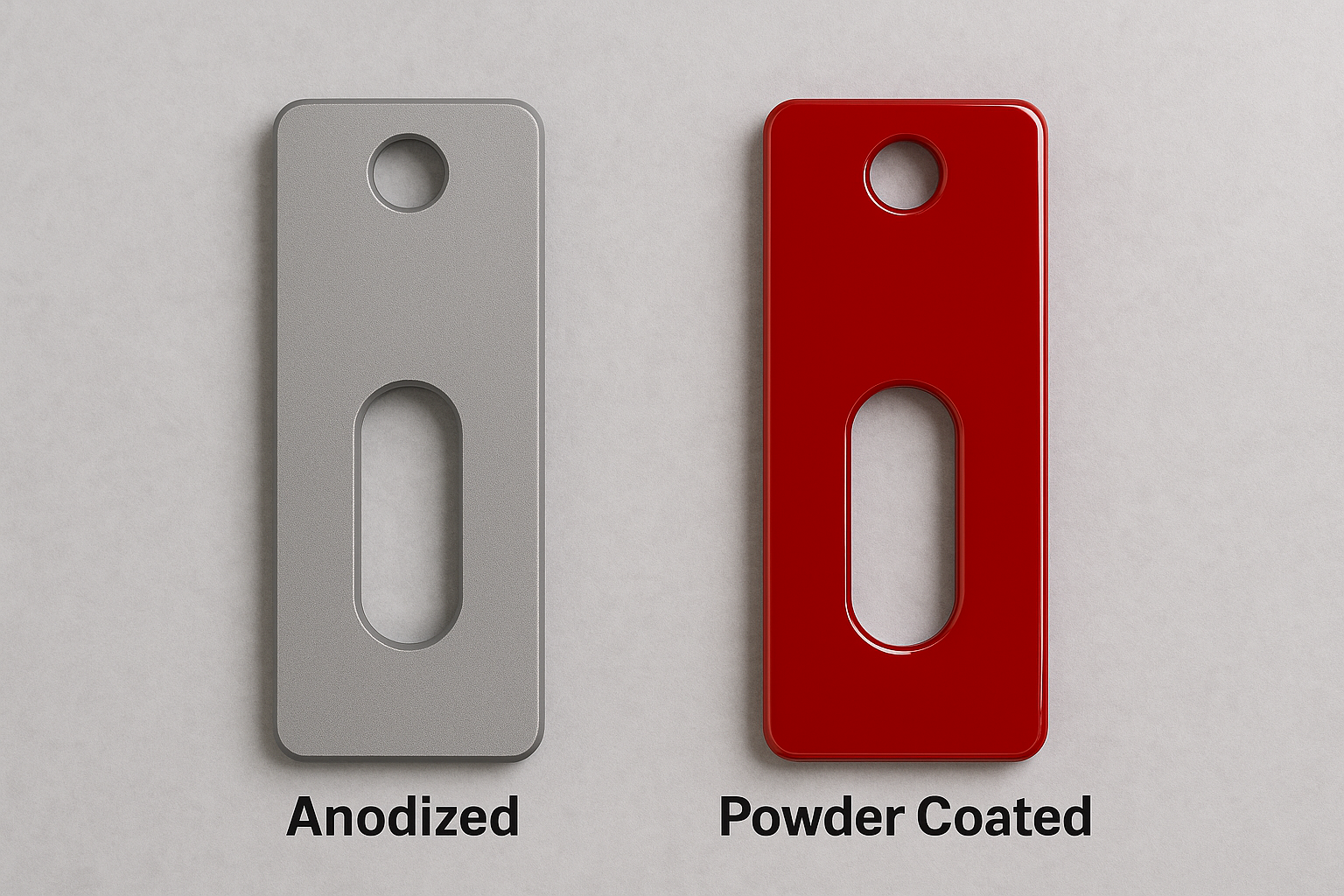
While chem film tends to have a more matte or slightly iridescent finish, anodizing can deliver everything from clear to black and custom-colored coatings, which can be a benefit for branding or identification.
When to Use Each Finish
So, when does chem film make more sense? It’s often the right call for components that need to remain conductive, like grounding points or electronics housings. It's also commonly used as a base layer for paint or powder coating because it promotes adhesion and protects the metal underneath.
Anodizing, on the other hand, is ideal for parts that will face wear and tear, frequent handling, or harsh environments. Because of its excellent corrosion resistance and hardness, it's a popular finish for aerospace hardware, military equipment, and even consumer electronics that require a clean, durable finish.
Sometimes, it's not about choosing one or the other. In certain assemblies, engineers use both anodizing for the main body of a part, and chem film on mounting tabs or electrical contact points. That hybrid approach allows you to take advantage of both finishes' strengths where they’re needed most.
Choosing the Right Protection for Your Aluminum Parts
At the end of the day, deciding between chem film and anodizing comes down to performance goals. If your priority is conductivity, paint prep, or minimal coating thickness, chem film is a great choice. If you need durability, wear resistance, or long-term exposure protection, anodizing is hard to beat.
And if you’re not quite sure? That’s where we come in.
Reach out to the team at LMC for expert advice on selecting and applying the right aluminum finish, so your parts don’t just meet spec, they perform exactly as expected.